
 Arabic


Demoralized by the charms of pleasure of the moment so blinded by desire that
they cannot foresees the pain.
Sender
Sender
Instructions
Mon 23 Feb 2026
Farming
Yemen's Green Treasures: From Mountain Terraces to Desert Oases
Yemen's diverse geography creates unique agricultural landscapes found nowhere else in the Arabian Peninsula. From the mist-covered highlands of Haraz, where coffee cherries ripen at 2,000 meters above sea level, to the lush date palm valleys of Hadhramaut, farming here blends ancient wisdom with natural abundance.
Coffee Heritage: Yemen gave the world its first commercial coffee trade. The famous Mocha beans, grown in volcanic soil, still carry the port city's name across global markets. Traditional dry-processing methods preserve the distinctive chocolatey, wine-like notes prized by specialty roasters.
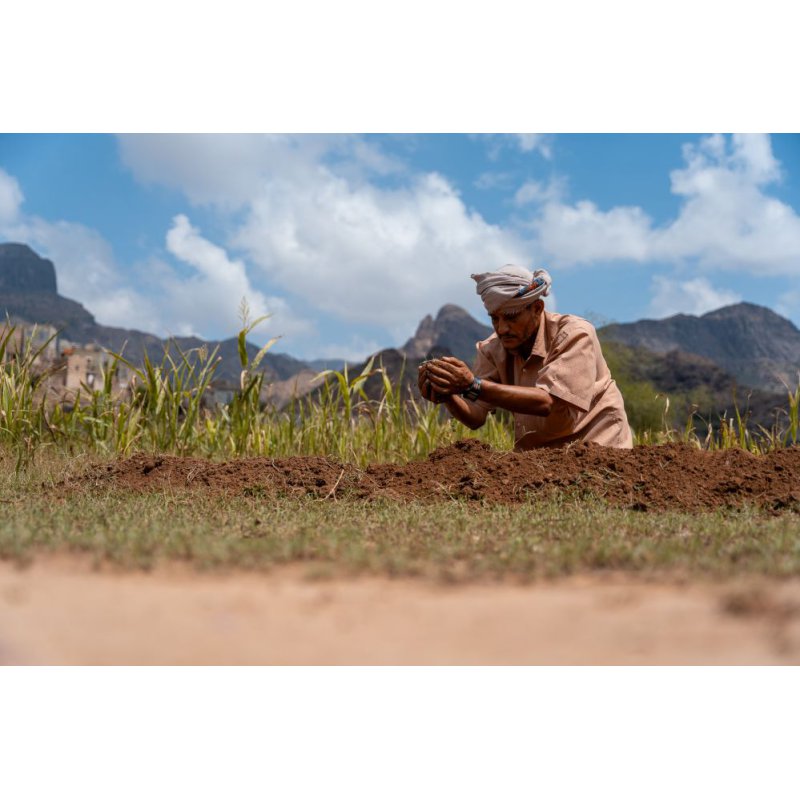
Terraced Engineering: For over 2,000 years, farmers have carved stone terraces into mountainsides, creating sustainable water management systems that capture monsoon rains. These living monuments to agricultural engineering support sorghum, millet, and vegetables.
Date Palms: Hadhramaut and Al-Jawf produce premium date varieties including Anbar, Barni, and Sukkari - golden, caramel-sweet fruits that anchor local diets and traditions.
Challenges & Innovation: Water scarcity and climate shifts drive adoption of drip irrigation and drought-resistant crop varieties. Organizations support seed banks preserving heirloom grains adapted to arid conditions.
The sector sustains rural livelihoods and preserves cultural heritage rooted in the land itself.